
Published on 10/13/2026
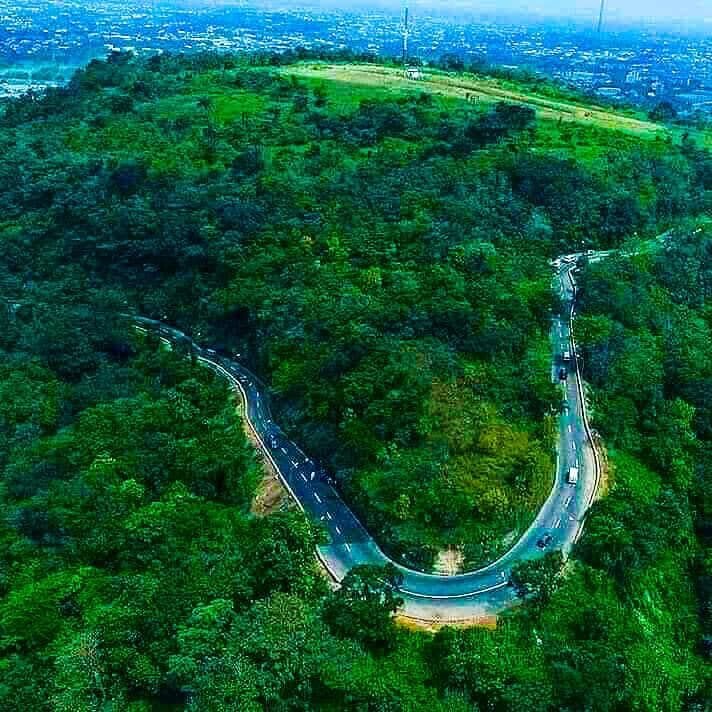
There are states in Nigeria where a plot of land costs less than a secondhand generator in Lagos. Not because the land is worthless, but because the market that prices it has not yet connected those locations to the investment conversation that dominates property discussions in the country. The Nigeria Property Centre's Q3 2026 market report confirms that Abia recorded a median asking price of just ₦5.4 million for all property categories, Ekiti shows a median of ₦6 million and Nasarawa sits at ₦20 million, against Lagos's ₦300 million median and Abuja's considerably higher premium corridor pricing. These numbers are not theoretical. They are live market data from October 2026, and the investment logic behind each of them is specific and worth understanding. At TheHouse48, cheap land is only valuable when paired with a reason it will not stay cheap, and every state below has one.
Ekiti State: Agricultural Land at ₦600,000 Per Plot
The Nigeria Property Centre's Q3 2026 data places Ekiti's lowest land asking price at ₦600,000 per plot, with the state median at ₦6 million for all property, one of the lowest in the country. Ekiti sits in the southwestern zone of Nigeria's Middle Belt, a state rich in agricultural land, mineral resources and an educated population that has historically exported significant human capital to Lagos and Abuja. The state capital Ado-Ekiti is a university town with Ekiti State University and Federal University Oye-Ekiti providing the demand base for student housing and residential infrastructure. The investment case in Ekiti is not capital growth driven by corporate migration. It is yield-driven, agricultural-use play in a low-inflation environment where the cost base for building and development remains significantly lower than in the south-west commercial corridor, combined with a student accommodation opportunity that most investors have not yet identified.
Nasarawa State: The Abuja Adjacency That Changes Everything
Nasarawa recorded the lowest headline inflation rate of any Nigerian state in July 2026 at 7.9%, the only state where both headline and food inflation were below 7%, according to the National Bureau of Statistics. Its Q3 2026 median property asking price of ₦20 million reflects a market that has not yet been fully repriced for the most important factor in its investment thesis: Nasarawa shares a direct border with the Federal Capital Territory and has been absorbing Abuja's residential overspill for the past decade. The Lafia and Keffi corridors in particular are the most actively developing areas, with plots in accessible Nasarawa locations entering the market from ₦2 million at the lower end of the range. State government capital expenditure emphasis, including a ₦656 billion 2026 budget weighted toward infrastructure, is laying the groundwork for connectivity improvements that will progressively compress the effective distance between Nasarawa's developing corridors and Abuja's established districts. This is a market where the fundamentals already exist and the pricing has not yet caught up with them.
Kwara State: The Ilorin Opportunity Below Its Own Value
Kwara's Q3 2026 median is ₦42 million with the lowest listed property entry at ₦300,000, reflecting the extremely wide spread between Ilorin's more developed residential areas and the more accessible peripheral corridors. Kwara recorded an annual inflation rate of 11.7% in May 2026, one of the lowest among the North-Central states, confirming a cost environment that makes building and development meaningfully cheaper than in the southwest. Ilorin is a city of over one million people with a major university, an expanding commercial base and a position on the Lagos-Abuja highway corridor that gives it genuine economic logic. Land in accessible Ilorin corridors outside the GRA and established residential zones is available at prices that experienced investors describe as below replacement cost once infrastructure and construction cost data are applied. The key distinction between Kwara as an investment market and the other states on this list is that it has an existing urban demand base large enough to sustain rental income without requiring a long wait for population growth to generate tenants.
Akwa Ibom State: The Southern Oil Belt with the Lowest Median in the Country
Nigeria Property Centre's Q4 2026 report identified Akwa Ibom as the most affordable of the nine ranked states with a median asking price of ₦50 million. For a southern state with a functioning capital city, a significant oil sector presence, a major international airport and an established university in Uyo, that pricing reflects a market that has not been fully discovered by the national investor class that concentrates on Lagos and Abuja. Akwa Ibom's property market is primarily driven by state government employee demand, oil sector worker accommodation and diaspora investment from Akwa Ibom indigenes abroad, all of which represent captive, relatively stable demand profiles. The state government has been consistent in infrastructure investment across successive administrations, which has maintained road and utility quality at levels that support genuine residential quality of life rather than investment-grade property that requires significant off-grid supplementation.
The Due Diligence That Does Not Change By Location
Every one of these states offers land at prices that Lagos buyers would struggle to believe. None of them offers land that can be purchased without the same rigorous title verification that every Nigerian land acquisition requires. State-level variations in land administration mean that Ekiti, Nasarawa, Kwara and Akwa Ibom each have their own processes for confirming that a plot is free from government acquisition, that the survey plan is registered and that the chain of title is clean. The cheap price is the opportunity. The title verification is the protection, and skipping the second because of the excitement created by the first is the mistake that land buyers at any price point consistently make and consistently regret.
TheHouse48 believes that Nigeria's cheapest land markets are not consolation prizes for buyers who missed Lagos. They are genuine opportunities for buyers with the right time horizon, the right local network and the willingness to conduct due diligence in markets where the information infrastructure is less developed than in the major commercial centres. The returns that Lagos's early buyers captured are still available. They are just in different states.
Sign up for our emails and be the first to know about special offers.
Sign In
Comments